Showing posts with label learning through play. Show all posts

Sunday, 18 December 2011

Kidspace Children’s Museum, California.


Kidspace children's museum in California
Kidspace is a children’s museum in Pasadena, California. Its aims and goals are very similar to Eureka!'s as it is structured around a learning through play philosophy, and aims to “inspire learning through self-directed, interactive experiences and play in the arts, sciences and humanities that enrich children, families and the community”. 

I was in the USA recently with Rebecca, one of the other Enablers here at Eureka!, and decided to go and pay the people at Kidspace a little visit. Children’s museums are extremely popular in America, with at least twenty-nine of them in California alone so, no matter where we were, we would have had no problem in finding one, but it just so happened that Kidspace was only a fifteen minute drive from where we were staying. We rang up, explained that we were members of the Eureka! team, and were invited for a tour around the museum. Awesome.

Kidspace caters for children aged 0 to 9 years old and, although Kidspace is a lot smaller than Eureka!, there is still a lot for children to do. We didn’t get a chance to play on all of the exhibits, but even with our time limitations it took us a good two hours to make our way around the five galleries .

The Kidspace galleries are:
The Early Childhood Learning Centre
  • EarlyChildhood Learning Centre – A gallery where children aged  0-4 years can play, dance, sing, read at their own pace, and where child-adult interaction is encouraged.
  • Central Courtyard – One of the few places in the museum where parents are allowed to sit and relax, the courtyard offers children water fountains and an outdoor dig-it build-it area.
  • The Digging Deeper Gallery – As one of the main galleries, Digging Deeper offers children the chance to get up close and explore nature. Digging Deeper also has real insects on show, fossils to unearth (see the video on the right!), and an amazing Nature Exchange (which I’ll talk about later).
  • Wisteria Courtyard – An actual child-sized road for children to peddle trikes around whilst learning the meaning of everyday road symbols.
  • The Gardens – The gardens has a lot to offer. Vegetable gardens, a climbing wall, waterwheel and water cycle exhibit. All the different plants offer a huge range of colours and smells, and the winding paths make everything feel that little bit more magical.
Bugsy's Diner in Digging Deeper
Just like Eureka!, Kidspace uses its surrounding environment to its advantage. Being situated at the foot of the Pasadena hills, and in the grounds of the Arroyo Seco Park, Kidspace is surrounded by lots and lots of nature. There is a giant park at the front and a giant forest to the rear and, because of this, a lot of the exhibits are designed around nature. The main gallery, Digging Deeper, offers a lot in the way of this. We were able to come face-to-face with scorpions, a baby goliath spider (which absolutely terrified me), and even bumble bees. We even got to watch a show all about how bees communicate through different ‘dances’, which were re-enacted by one of the Educators, who are similar to our Enablers here at Eureka!

The Nature Exchange
One thing I must talk about though is the Nature Exchange. As a way of getting children engaged with the world around them, and as an introduction to trading, collecting and making observations I thought that this was brill. Children are encouraged to learn while exploring, so if the children discover anything they find particularly interesting they can either collect it, or make a note of it by drawing a picture or writing a description. The children can take their findings to one of the Educators at the Nature Exchange, who will award the child points for their discovery. Over time the child can accumulate points which they can then trade in at the Nature Exchange for ‘nature based’ rewards - things like small shells for a few points, and large pine cones for a lot of points. Not only this, but the children are encouraged to keep making discoveries  away from Kidspace, which they then bring with them when they return, so in this way the learning never stops. I really did like this a lot.

Some of the items traded in at the Nature Exchange

There is so much to talk about that I can’t possibly fit it all into one post, but you can always visit the Kidspace website if you want to have a closer look at what they offer.

Eureka! and Kidspace are both children’s museums, and they both offer a learning experience for children that is built around play and discovery, however they are both very different in how they offer this. I think it has a lot to do with the environment in which the museum is set. Anyway, that’s just a little bit about our trip to Kidspace Children’s Museum in Pasadena, California. It’s really awesome and we had a brilliant morning there, so if you’re ever in the area you should check it out.

Benjamin Guilfoyle
Early Years Enabler 

Thursday, 29 September 2011

Loose parts is AWESOME!

Wait… what? You don’t know what loose parts is? Well, let me bring you up to speed. The term ‘loose parts’ is just another way of saying ‘junk modelling’, and it’s a really cool, simple, fun activity that anyone can do.

Loose parts activities encourage open-ended learning, and are great tools to use with children of all ages and abilities, as it engages the imagination and helps to unlock creativity. Children love having the freedom to make and do whatever they want, so that’s what I try to give them.

I dedicated all of Sunday 25 September to loose parts, loading up the Imagination Space here at Eureka! with a whole host of bits and bobs that would otherwise have been thrown away. Big bits, little bits, plastics and fabrics, old boxes and tyres, scraps of fabric, garden canes and loads, loads more. We had a real treasure trove of junk just waiting to be made into something amazing. I also gave the children the opportunity to try their hand at designing by having a designer’s area where the children could plan their creation before attempting to make it. Boy, did we make some awesome stuff!

Creativity and FUN! at loose parts day, 25 Sept 2011
We had all sorts of amazing creations: monsters, robots, dolls and animals, right through to spaceships, trains, musical instruments, and bows and arrows. The photos here capture just a few of the amazing creations that we made. Even some of the Enablers came to join in the fun!

Loose parts day was a really big hit, and everyone who took part said that they thoroughly enjoyed themselves, both adults and children alike. Best of all, the children could take home everything that they had made - and why shouldn’t they? All the materials were things that we didn’t need, and the children spent a lot of time turning those unwanted objects into something so much better than what they were originally made for!

We had a lot of fun on loose parts day, and would hate for anybody to miss out being part of such a great opportunity to be creative, so come along and join in if you can. We’ll be holding our next loose parts day on Sunday 4 December. If you’d like to make something as cool as the creations in the pictures, why not come on down to Eureka! and join in the fun? Come along to use your imagination, be creative and make something fantastic!

Ben Guilfoyle
Specialist Play Enabler

Thursday, 16 September 2010

Playing with science: summer educational shows at Eureka!

With a successful summer just finished, I wanted to write a bit about the educational experiences we’ve provided schools during the summer term. It’s a time you might think is a bit more relaxing as everyone looks forward to the holidays, but here at Eureka! play and learning doesn’t stop. During the summer term, we offer schools the chance to experience science shows as part of an educational visit to the museum. Developed entirely in-house by our Learning Team, science shows are a great way of teaching scientific concepts to a large number of children in a fun and interesting way.
Feeling some forces during a science show.
Over the years we have developed a long list of interactive, drama-based workshops covering all areas of the curriculum, but the science show format with its ‘show and tell’ lecture presentation style marked a new venture for us when we embarked on our first show back in 2007 called ‘Splash!’  Aimed at Key Stages 1 and 2 this show looks at all things water related - where it comes from, some of its properties, fun things you can do with water and the importance of saving it.

Presented by our resident science duo Fizz and Flash, Splash! is a great show for a mixed age audience. Even though early KS1 pupils may not fully understand all of the concepts, they still find it visually stimulating and we’ve even performed the show in small rural schools where the audience age range has been from reception to Year 6! Highlights of the show include making water disappear, a water conservation version of Play Your Cards Right and the giant bubble finale where a lucky member of the audience gets to step into a giant bubble!
Fizz and Flash demonstrating the giant bubble in Town Square.
In 2008 we developed a new show based on forces called ‘Feel the Force’. Aimed at Key Stage 2, this time Fizz and Flash are joined by Ted the astronaut bear and explore the different types of forces, demonstrating what they are and why they are so important.   

Forces can be a difficult topic to teach so this show aims to turn a relatively dull subject into a memorable learning experience with lots of hands-on demonstrations and audience participation.

The latest addition to our science show repertoire was developed in 2009. We wanted to write a show with a human body theme and felt that focusing on the digestive system would give us lots of interesting concepts to explore so we came up with ‘From the Chew to the Poo!’ for Key Stage 2 pupils.

This show follows the fascinating journey of a banana and peanut butter sandwich from the moment it is eaten to the moment it leaves the body as waste. Through a series of interactive activities children find out how saliva in the mouth breaks down food in order for it to be swallowed, how our bodies retain the vitamins and minerals our bodies need and more amusingly how it gets rid of what we don’t need.

This is definitely the yuckiest of our three shows and I’m sure our Enablers didn’t think they’d be making ‘poo’ on a daily basis when they came to work at Eureka! but it’s a topic that most kids find hugely fascinating and we get some fantastic comments and pictures from schools following their visit.

It’s definitely been a challenge writing and developing these three shows but thankfully they’ve all proved to be successful additions to our school’s programme. So much so that they also form part of our Outreach provision where schools can book for our Enablers to come and deliver a show in their school.

We’re developing a totally new show now for 2011 which will have a chemistry theme and probably lots of fizzes and bangs - hopefully though we won’t blow ourselves up in the process!

Jenny Parker is the Play and Learning Coordinator at Eureka! The National Children's Museum.

Tuesday, 27 April 2010

Bringing Reggio Emelia to Eureka! Early Years

Eureka! is hosting Early Years Week from Tuesday 11 May to Friday 14 May. More information can be found on our Early Years section of the website.

As the Early Years Specialist Enabler at Eureka! I am always looking for new ways to strengthen our Early Years offerings in the nursery and museum.  Last May, I experienced one of the big benefits of my position, when I had an amazing opportunity to visit and share our best practices with a bilingual school in Monza, Italy: ‘Play English’.


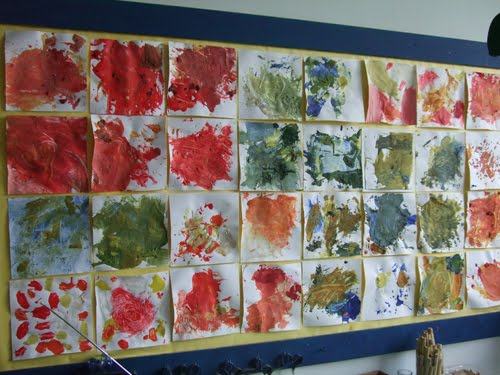
Pictures in the Play English atelier (Art Studio), May 2009


My visit to Play English was part of a two-year exchange programme the school had with the Eureka! Nursery. The Play English ethos draws heavily on the HighScope and Reggio Emelia philosophies. While I understood the philosophy, I wasn’t clear how the two approaches and the Early Years Foundation Stage would work together. That was where Play English came to my aid. Play English promotes a mode of learning that allows the child the freedom and independence to discover their own types of learning within a structured theme. Giving children this independence and the choice to learn in a comfortable and familiar manner has been seen to increase their confidence and improve life long learning.

‘Play English’ have a full time Art Specialist called the ‘Atelierista’, who works with small groups of children both in the classroom and in the art studio called the ‘Atelier’ where she develops and extends the children’s creativity as a language of expression. I spent time with the schools ‘Atelierista’ observing her sessions with children, her planning and had the opportunity to discuss her philosophies.

Working with the ‘Atelierista’ I discovered that children can have freedom of self discovery within a themed programme. I used this knowledge to design a programme for the Eureka! Nursery children. It was a huge success and inspired me to roll it out to a larger audience, so I developed the idea into this year’s Early Years Week programme ‘Light & Shadow’. 

Light & Shadow allows children to explore the world of 2 and 3 dimensional objects and to see how light affects the world around them, developing their curiosity of cause and effect. During the week children will have the opportunity to explore with torches in the dark crevices of the Desert Discovery Gallery; there will be large sheets with images and shadows projected on them in various places in the museum. Children will be able to look at their own shadows created through natural light on the balcony and much, much more. With the use of both natural and artificial light they can discover the effects created and by using their own investigation techniques they can explore form, colour, density, pattern and shape, through both natural and artificial objects.

One important aspect that I took with me from my experience, is the way to help children with their own personal development through investigation, experiment, and problem solving. I believe that the concept of child-led play with open ended outcomes is essential to the personal learning development of children.

It is this freedom to let children be creative without set directions and instructions that allows the development of independence, control, confidence, and the ability to learn by their own mistakes and successes

Penny Dargan is an Early Years Specialist Enabler at Eureka!

Wednesday, 7 April 2010

Never too late for play time

Just before Easter holidays started at Eureka! one of our local schools visited with their 7–11 year-old (Key Stage 2) pupils. They were from a village school in Cheshire so it was a smaller group, with only about thirty children in total.
Children pretend to be cashiers and customers
in the Bank, Sept. 2009.
Once inside the museum, it was hard to move the children on from the Town Square! They were having a whale of a time dressing up as postal workers and delivering parcels to the bank, the shop, the garage and the ‘Dig’, our miniature archaeological site. They went shopping, worked the tills and even stacked shelves in the miniature Marks and Spencers. At the bank some kids filled out withdrawal forms, handing them over to classmates in cashiers’ jackets, who then had to decide whether or not to give them a PIN. There were several keen mechanics in the garage, while the petrol pump attendants also worked very hard at their own jobs.

As we watched the children thoroughly enjoy themselves—and helped them use their Eureka! cash cards in our very special cash machine so that they could collect Eureka! bank notes with characters such as Scoot the Robot or Orby the Alien incorporated in the design —we had a chance to talk with the four teachers chaperoning the class. They said that, after observing the children’s obvious enthusiasm, they had made an unanimous decision to re-introduce role playing into their school’s Key Stage 2 curriculum.

This is exactly the reason I love working at Eureka! I believe 100% in our ‘learning through play’ philosophy and it always delights me when our ideas are taken up by other education professionals. I know, as does any parent, that all children are full of curiosity from the moment they are born and take enormous pleasure from learning. They begin questioning almost as soon as they can talk. Learning is fun – and good teachers, both formal and informal, should be doing their best to keep it that way. I’m extremely happy that at least one set of Key Stage 2 children will be finding that some of the fun they experienced here will be following them back to school.

Jill Ward is an Enabler at Eureka! The National Children’s Museum

Thursday, 18 February 2010

Play is good for babies

This week we learnt of the importance of play for babies. Sue Palmer explained in the Guardian that children need to play and to interact with other people in their early years and called for a campaign to raise awareness of these needs.

Of course children under five learn through play - it's their way of exploring the world around them. Here at Eureka! we encourage children to play right from birth and we offer many different experiences and learning opportunities that are linked to the early learning goals of the Early Years Foundation Stage.

Our two galleries dedicated for the under fives offer all sorts of challenging opportunities for supported and spontaneous play. And both SoundGarden and Desert Discovery give parents lots of opportunties to engage with their children and help them progress in their learning.

The multi-sensory nature of both galleries make them accessible for children at all levels. Whether by watching in shy awe, listening with great interest, taking small risks, playing alone or playing together, they let children explore at their own pace, helping them to become competent learners, skilful communicators and overall healthy, happy kids.

Wednesday, 10 February 2010

Play and the museum


The one indisputable fact about play is that it transcends time, geography and culture – children everywhere play and have played since the beginning of time. Children literally can’t stop themselves from playing because it’s as natural as eating and sleeping, and equally essential to healthy growth and development. But unlike eating and sleeping, play is the one thing that children like to do without encouragement from adults. In fact, research shows that children play even when it’s actively discouraged by adults.

But when it comes to museums, play is probably not the first thing that comes to mind. Although things have certainly moved on, especially with Kids in Museums, there still exist many museums where children are not very welcome, and where they are the admonishments to be quiet and not to touch anything are, unfortunately, the memories they take away with them. 

Of course children’s museums turn the world upside down in this respect and encourage lots of active, noisy engagement where playing and touching is absolutely required. More than anything else, it is the emphasis on play and the application of relevant academic theories of learning and child development (Piaget, Vygotsky, Bruner, Gardner), and methodologies of play-based learning that sets Eureka! and all children’s museums apart from other, more traditional museum approaches to children.

When children play they learn as well as have fun; they experiment, collaborate, test ideas, communicate and express their thoughts. And because they enjoy themselves, they are far more likely to remember what they’re learning. When children come to Eureka! they come to play. Their families and teachers bring them to Eureka! because they know that they will learn while they play – everyone is happy! At the end of any visit, children have had a fun day out without it feeling like “learning”. Parents and grandparents leave satisfied that they have done something “productive” for their offspring and not wasted away an afternoon in mindless activity. And teachers are confident that the curriculum links have helped them move forward to meet their targets.

Another important distinction from the traditional museum, of course, is that children’s museums do not have a collection and therefore do not attempt to exhibit or interpret objects of any description. Children’s museums were originally an offshoot from traditional museums, beginning with the Brooklyn Children’s Museum which opened in 1899. Over time, and most notably initiated by the work of Michael Spock at the Boston Children’s Museum in the 1960s, the principles of hands-on interactive exhibits and active, participative, discovery-based learning gained favour and the collection faded into the background and a new play-based approach to children’s learning evolved. This has defined children’s museums ever since and resulted in their growth as a worldwide phenomenon.

So, without the need to display and interpret, to use objects as the focal point, children's museums are free to explore childhood and to create learning opportunities for children from an unlimited range of perspectives and disciplines. We are able to put the child at the centre, giving them choice and control over their play and creativity and fostering independence, self-confidence, self-esteem.

This post is taken from a recent talk given by Eureka! CEO, Leigh-Anne Stradeski at the Rethinking Children/Childhood in the 21st Century on 4-5 February 2010 at Birkbeck University London. To hear more, listen to the talk and view presenation slides

Friday, 29 January 2010

Make time for a story

On the eve of National Storytelling Week I thought I'd tell you about some of the storytelling we get up to at Eureka!.

Although we use traditional and well-loved stories a lot of the time, (my favourite being ‘The Gruffalo’), we also tell a different kind of story; a story without a book. I love this kind of story as it allows me, as the storyteller, to really become part of the story. The basic story is the same but every narrator tells it in his or her own way.

‘The glow-worm who couldn’t glow’ written by Ben Healy, one of the enablers here, is based around a set consisting of a tree, some grass, some rocks, a few flowerpots and a watering can. I was amused the other week, when I came to tell the story, by the reaction of one young boy. I had previously delivered a science busking session, which he had obviously attended. Apparently not being familiar with the concept of multi-tasking, he enquired of me in a voice filled with equal amounts of suspicion and confusion “Is this ‘a story’ or is it … ‘an experiment’?” (I still wonder what experiment he thought those particular pieces of equipment might have been used for!)

Children of all ages love the story of little babyglow, who can’t go to a party until she learns to glow and sets out to find the wise old millipede to find out how. She meets many friends along the way – and a very mean earthworm! The story has a nice moral (that friends make you happy and that if you’re mean you end up having no fun) but it is also filled with lots of little nuggets of information. Take the following extract for example:

Babyglow has got stuck in a spider’s web and the spider appears and asks in a menacing voice...
SPIDER: Are you my dinner?
BABYGLOW: Ooh! I hope not!
SPIDER: Well, let’s find out; do you have big boogly eyes?
BABYGLOW: No, my eyes are quite small.
SPIDER: Well, do you have 6 spindly little legs?
BABYGLOW: No, I don’t have any legs.
SPIDER: Do you have wings?
BABYGLOW: No, no wings at all.
SPIDER: Then you’re not my dinner, you’re not a fly.
BABYGLOW: Do you only eat flies?
SPIDER: Yes, lovely crunchy flies – but spiders are a bit short sighted so I couldn’t tell what you were.

So, that tiny extract tells us that spiders eat flies and are quite short sighted and also gives some of the typical characteristics of a fly. It’s surprising how much children can learn without realising, just by listening to a story. I think storytelling can be a great educational tool. I leave you with words credited to a Native American proverb:
“Tell me the facts and I’ll learn. Tell me the truth and I’ll believe. But tell me a story and it will live in my heart forever.”
What stories do you like to tell your kids? Or what are your favourite stories from childhood?

Jill Ward is in the Front of House team at Eureka!

Wednesday, 9 December 2009

A Good Play

A Good Play
We built a ship upon the stairs
All made of the back-bedroom chairs,
And filled it full of sofa pillows
To go a-sailing on the billows.
We took a saw and several nails,
And water in the nursery pails;
And Tom said, “Let us also take
An apple and a slice of cake;”
Which was enough for Tom and me
To go a-sailing on, till tea.
We sailed along for days and days,
And had the very best of plays;
But Tom fell out and hurt his knee,
So there was no one left but me.

This poem by writer Robert Louis Stevenson, known for writing the children’s story Treasure Island, shows just how imaginative children are and how they can often entertain themselves for endless amounts of time using nothing but simple household objects. 

As a young child I can clearly remember spending many a wet day creating dens out of duvets and chairs with my younger sister and then holding tea parties in our new creation!

Friday, 4 December 2009

Learning through play with Walt Disney

We turn to Mickey Mouse creator, Walt Disney (1901-1966) today, who was born on 5 December 108 years ago. This quote embodies everything that Eureka! aims to be with its learning through play philosophy...
"I would rather entertain and hope that people learned something, than educate people and hope they were entertained."

Wednesday, 2 December 2009

Dirt can be good for children


‘Children should be allowed to get dirty’ according to scientists who have found being too clean can impair the skin's ability to heal, reported recently in this article from the BBC

It goes on to say that researchers from the School of Medicine in California believe that normal bacteria which lives on the skin trigger a pathway that helps prevent inflammation when we get hurt. The bugs dampen down overactive immune responses that can cause cuts and grazes to swell. Many believe our obsession with cleanliness is to blame for the recent boom in allergies in developed countries:
  • Some experts are saying that the findings could provide an explanation for the ‘hygiene hypothesis’, which states that exposure to germs during early childhood primes the body against allergies.
  • The lobby group Parents Outloud said the work offered scientific support for its campaign to stop children being mollycoddled and over-sanitised.
  • A spokeswoman for Allergy UK said there was a growing body of evidence that exposure to germs was a good thing.
So what do you think? Should we be exchanging bubble baths for mud baths and are we in fact cleaning our hands, clothes, homes etc too much and ‘washing away’ all the fun of messy, outdoor play?

For parents, it can present a big dilemma. With literally 100s of adverts on TV and in newspapers and magazines telling us to kill every germ in sight, people do it, with the best intentions to ensure children have as healthy an environment as possible. Let’s think back though . . . how many of you scrambled through mud and squealed in equal delight and repulsion when you discovered a worm? Now be honest, how many of you wondered what it would feel or even, dare I say it, taste like? In my experience, slightly gritty with an earthy aftertaste – rather like the feel of spaghetti. The worm was cleaner when I put him back in the soil but I wasn’t and it felt great and here I am to tell the tale! Now I don’t recommend the activity generally but what I was doing, reflecting back, was engaging in imaginative, investigative and ultimately messy, dirty fantastic play and I was also discovering my world and taking risks (as well as finding out what a worm tasted like). And often returning to my mum with dirty grazed knees from falling over in stony soil, she would wipe away the blood and mud and send me off with a wagon wheel (which of course were much bigger back then!).

In fact aren’t we encouraging children to play outdoors even more now? Isn’t there also a huge campaign to get them out and about to grow their own vegetables in the garden – to dig, to sow, to plant, to harvest, to get out in all weathers and connect with the earth – I’d rather have a happy, stress-free muddy child than one who’s reluctant to get clothes dirty for fear of reprisal. Stick some old clothes on, that’s what I did.

So, as long as we remember the general rules of washing hands after the toilet and before touching and eating food, immune systems will balance themselves out, leaving children more time to discover their inner explorers, gardeners, botanists, zoologists, etc as they keep busy with playing and learning – the thing they do best!

Liz Smallman is Head of Learning at Eureka!

Wednesday, 25 November 2009

Playing with science

The ‘enablers’ here at Eureka! are delighted to educate and, at the same time, entertain our visitors. We are also very keen to encourage, enthuse and excite the children (in fact many things beginning with ‘e’, it seems!). One of the ways we do this is by delivering science busking sessions. It’s amazing how people’s opinions of science change when they discover what fun it is to play with science. I always start my sessions with a question – “Who loves science?” I ask the question again at the end of the session and the response is always considerably more enthusiastic.

A 'science busking' session lasts about 20 minutes and consists of up to a dozen interactive demonstrations (of which we have a repertoire of about 40). For example, learning about density becomes magical when the children are introduced to ‘Bob the Pen Lid’, who has been trained to dive and float on command (providing you say the magic word –‘please’). When they spot the ‘trick’ and hear the explanation they are far from disappointed as I explain that science is actually better than magic. If Bob was magic I’d be the only person with a pen lid that obeys my commands; whereas, now that they all know the science, they can go home and make their own Bob and amaze their friends.

Most of the demonstrations are designed to be easily repeated at home in order to encourage children to try things out for themselves. I also tell a true story that shows that anybody can be a scientist – all you need to do is ask questions and try to find out the answer.

Sometimes we use a powder called Instasnow (a super absorbent polymer called sodium Polyacrylate) for one of the demonstrations. Water added to a scoopful in a child’s cupped hands produces a flurry of ‘snow’ cascading out of their hands and into a waiting bowl. We also do fabulous demonstration using milk, food colouring and washing-up liquid (see below). During one session a young boy, about six years old, asked “What would happen if you put that ‘magic’ powder into the milk and food colouring?” It was a good question, a scientist’s question, so what else could we do but put it to the test. We added a few scoops of Instasnow to the milk and it slowly soaked up the colourful milk, drawing it to the middle of the plate and making a colourful little snow ‘volcano crater’. We now do that demonstration ourselves – always giving credit to that six year old scientist who invented it.

Whenever I do those demos and tell that story I have to allow extra time at the end of the session because, invariably, I am inundated by a crowd of children asking “What if we put this in that?” and “Can we try mixing these together?” etc. It just goes to show that, given the opportunity, children are always incredibly eager to ‘play with science’.

Have a go at colour-changing milk at home

You'll need: milk (whole), a dinner plate, food colourings, washing up liquid and cotton buds.

Method
  • Pour enough milk onto the plate to completely cover the bottom
  • Add one drop of each of the different colours of food colouring to the milk. Keep the drops close together in the centre of the plate of milk
  • Use a clean cotton bud to ‘marble’ the milk
  • Repeat first two steps
  • Take another cotton bud, place a drop of washing up liquid on the end and touch the middle of the milk with it. Look at that burst of colour!
 

Explanation

    Milk might seem to be a liquid but actually it is mostly water with lots of little droplets of fat and protein and stuff floating in it. These little bits of solids are attracted to each other and bond together as if they were all holding hands, making ‘walls’ that the food colouring can’t pass! You can use your cotton bud to move the colours around the ‘walls’ to make a marbling effect.
    When you add soap it actually breaks the bonds that are holding the little fat and protein droplets in place and they zoom off in all directions; which bumps the food colours and makes them zing off to the edge of the plate, giving you a real 'wow!' moment.

    Jill Ward is an Enabler in the Front of House team at Eureka! 

    Wednesday, 4 November 2009

    The seven different types of play

    Who knew there were so many ‘types’ of play!? 

    In my research at Eureka! I came across this really interesting article from The National Institute for Play (NIFP) in the USA. They’ve identified seven different types of play that we all engage in at different stages of our lives.

    Attunement Play
    This means a feeling of being "at one" with another being, and this picture taken in our Me and My Body gallery demonstrates it pretty well as a mother and daughter work comfortably together on one of our exhibits.


    Body Play & Movement
    Keeping active is very important to us here at the museum and there are always plenty of items to keep you moving as shown by this young girl who looks to be really enjoying herself as she plays in the Eureka! grounds.


    Object Play
    Object play is perhaps the most obvious and familiar form of play because it involves toys. Here at Eureka! there are plenty of opportunities for object play, including treasure baskets, a collection of natural and household objects presented in a round basket for babies to explore. The aim of the baskets is to provide a rich sensory experience for children, letting babies explore objects by themselves, using their five senses and giving an ideal outlet for their natural curiosity.


    Social Play
    Social play is the rough and tumble we probably all remember enjoying with our brothers and sisters, friends and family as young children. Social play is also found in the close relationship between friends. As the picture below shows, this kind of play is commonly found at Eureka! and these children are happily creating a sculpture in our giant sandpit.


    Imaginative & Pretend Play
    In the Living and Working Together gallery at Eureka!, imagination is essential with role play opportunities all over the place. Whether you are drawing money out from the play bank or filling up your car at the petrol pump, a child’s mind can create a world of their own in this pretend town square.


    Storytelling-Narrative Play
    I really like this photo as the little girl seems to be listening intently to the story that is being read aloud to her even though she is sat in one of the walkways of the museum!


    Transformative-Integrative & Creative Play
    This picture was taken on National Playday where children were given cardboard boxes and craft materials and left to their own devices. All the children were very creative and many transformed their boxes into houses such as the boy below.


    Jenny Goodall is in the Play & Learning Team at Eureka!

    Wednesday, 21 October 2009

    Exploring materials

    Over the past month, I’ve been working with children from the museum’s nursery, exploring materials in a series of specially created workshops designed for 2-5 year olds. I planned the workshop content in line with the Early Years Foundation Stage (EYFS), the approaches of Reggio Emilia and High/Scope which promote children as active participants in their own learning.

    Children were offered the chance to play with a wide array of objects, from button to shells, straws to feathers, in whatever manner they pleased, and using all their senses. This was very much a partnership in learning for me as the practitioner and the children alike, rather than a formal lesson with lots of instructions.

     During the first week I introduced children to the objects and encouraged them to explore and investigate textures and outward appearances. The children were so engaged that as they left the the session I heard them comment “this is smooth” as they touched the door!

    In week two we looked at the shadows and reflections produce by the objects with the help of an overhead projector, a light box, and torches. We then took the torches into the dark ‘Desert Discovery’ gallery to explore further.

    Week three found us looking at the imprints objects leave behind when pressed into modelling clay. Some children chose to leave their objects in the clay, integrating it into their designs, while other children were more interested in their imprints.

    For our final session I hung up a white sheet and projected photographs from the previous sessions on to it. Needless to say, the children were fascinated with the images of themselves as they ran through with the sheet. I also brought out all the objects from previous sessions for one more explore.


    There were lots of surprises in the way the children played with the many different objects; one boy who usually loves to be very physically active showed himself to be a methodical learner, as he spent a great deal of time sorting out and identifying things. Each week the children surprised me with their understanding of the world around them; they made me and the nursery practitioners smile with their enthusiasm and knowledge and I had a great deal of fun learning with them.

    Penny Dargan is an Early Years Enabler at Eureka!

    Tuesday, 8 September 2009

    Learning through play


    It is that time of year again - back to school, and for some it will be the first time.

    Having worked in Early Years for many years I have seen frameworks and curricula come and go. Through my own practice and much reading, I know that young children don’t learn by listening to the teacher whilst sitting silently, bottoms on chairs. They learn through active engagement with their environment, through interaction with people - peers and adults.

    The introduction of the Early Years Foundation Stage in September 2008 has been a move in the right direction in ensuring all children under five are exposed to play based learning. (I know many nurseries and reception classes were already implementing a play based approach but many were not).

    In 1935 Susan Isaacs, educational psychologist and advocate of learning through play said:

    "We watch the nursery school child at play and accept this sort of activity at this age as normal and desirable. But too often the five and six year old is expected to cease play activities in school and begin lessons. Yet some educationalists would like all children under seven to enjoy nursery school conditions where play and living experiences are the accepted mode of learning.
    "

    I and the rest of the learning team at Eureka! believe this should be the accepted mode of learning (and that is certainly how we plan and deliver our school programmes) and it saddens me to see that in the 70 years since Susan made this comment, children have become subjected to more and more formality and tests.

    Here's hoping Jim Rose's review of the primary curriculum will enable older children to learn through play too. His recommendations include giving teachers new advice on how to stimulate play based learning, which will be passed onto parents and smoothing the transition from early years to primary by extending and building upon active, play-based learning.

    Rebecca Johnson is Director of Play & Learning at Eureka!